How I became a gym girl (and you can too)
The strength training story I've never told, and why your hormones need you to hear it
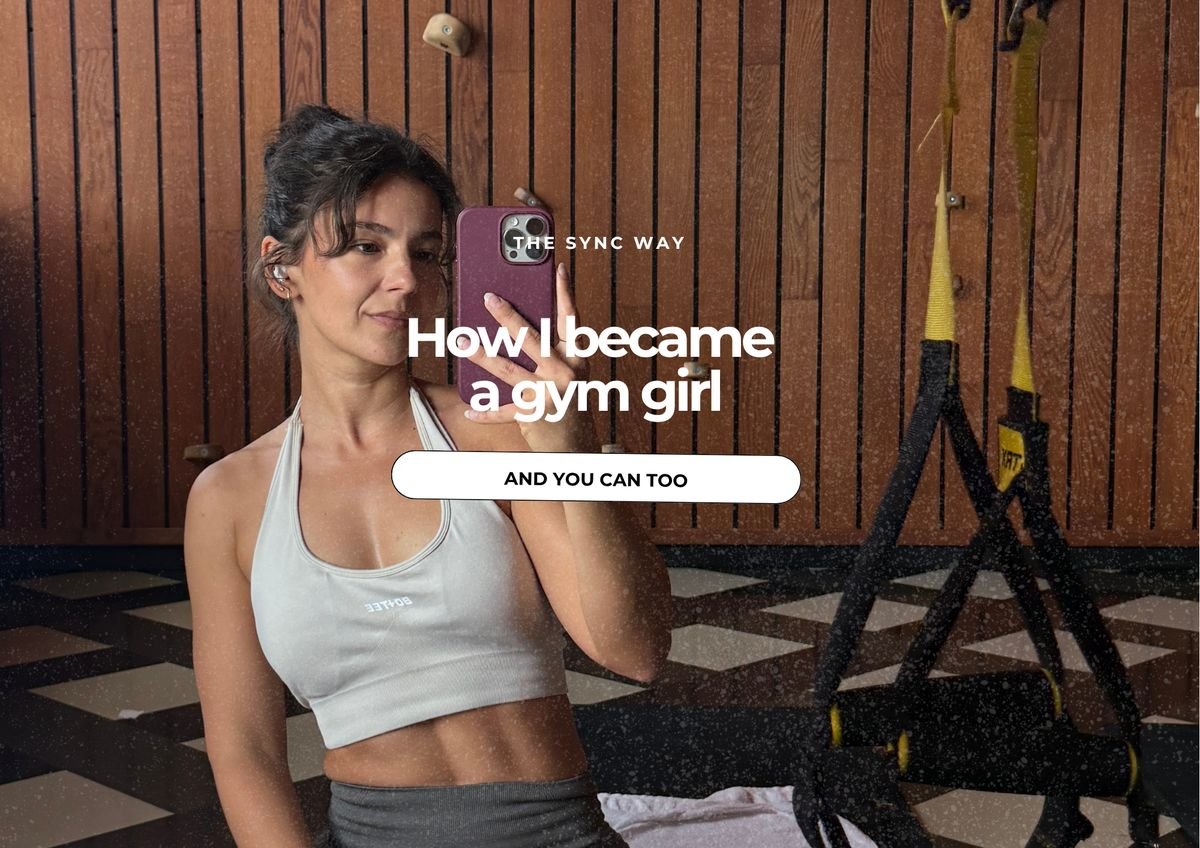
One of the most requested topics from you has been: How the heck did you get into strength training?
And I get it. Because walking into a gym for the first time feels like entering a foreign country where you don’t speak the language.
You walk in and you look around…
There are the gym bros. All pumped, dry scooping their pre-workout, hyping each other up between sets like it’s a team sport. They look like they live there. Well…they probably do.
And then there are the other women. The ones who seem to have it ALL together. Glutes so tight they have a shelf. Arms toned and no cellulite peeking through those tiny shorts. Pumping away with perfect form like they were born doing hip thrusts.
And you’re standing there like… “where do I even start?”
Intimidating as hell.
And IT’S SUPPOSED to feel that way. Because you just entered new territory, you’re a beginner again, and being a beginner at anything feels uncomfortable.
The Feeling I Got Addicted To
I’ve learned something about myself over the years: I actually love that feeling now.
I still get the jitters, the imposter syndrome, the “what the hell am I doing here” moments.
But I’ve proved to myself enough times that growth lives on the other side of that discomfort.
- Hosting a podcast for the first time? I almost puked on the way to the studio
- My first in-person workshop? I had diarrhoea the entire morning
- Standing in front of hundreds of people to present? Full-body jitters, my jaw was literally shaking
And every single time, what came after was this wave of fulfillment that nothing else gives you. That feeling of “I did something I couldn’t do before”
Over time, I got addicted to that loop. Being new at something, pushing through the discomfort, coming out the other side changed.
With the gym, it was the exact same story.
How I started and how it’s going 👇🏻
Why I’m Writing This
So today, I want to help you start your story.
I’m going to tell you how I built my strength training routine from scratch and why strength training is one of the most critical and most overlooked things you can do for your hormones.
Because when we talk about supporting our hormones, we always think about what we can ADD. A new supplement, a new superfood, a new diet protocol, a vibration plate, a red light mask, another wellness tool on the pile.
Always adding, adding, adding.
But what about doing something with what you already have? Your body, your muscles, the hardware you were born with.
Strength training is exactly that. You already have everything you need, you just need 3 things:
1️⃣ = the mindset to start
2️⃣ = the hunger to keep going
3️⃣ = a structure, a plan
Because if you walk into the gym and lift random weights with no direction, you won’t see progress. And when you don’t see progress, you lose motivation. And when you lose motivation, you quit.
That’s a failure loop.
I want to help you build a SUCCESS LOOP instead.
Why Weights? (The Hormone Science Nobody Explains)
I know so many of you already have your workouts. Maybe you’re into Pilates, maybe you love spinning, maybe you run, maybe you live for those HIIT and bootcamp sessions that give you that endorphin rush at the end.
And all of those have a place. I’m not here to trash any of them.
But none of them does what strength training does for your muscles. And your muscles are where the hormone magic happens.
When I say “lift weights,” most people hear: toned body, fat loss, looking amazing. And yes, all of those are perks. But that’s the surface.
The real reason I’m obsessed with muscle is because muscle is a metabolic powerhouse for your hormones. Specifically, for one hormone that controls almost everything else: INSULIN.
The Hormone Hierarchy You Need to Understand
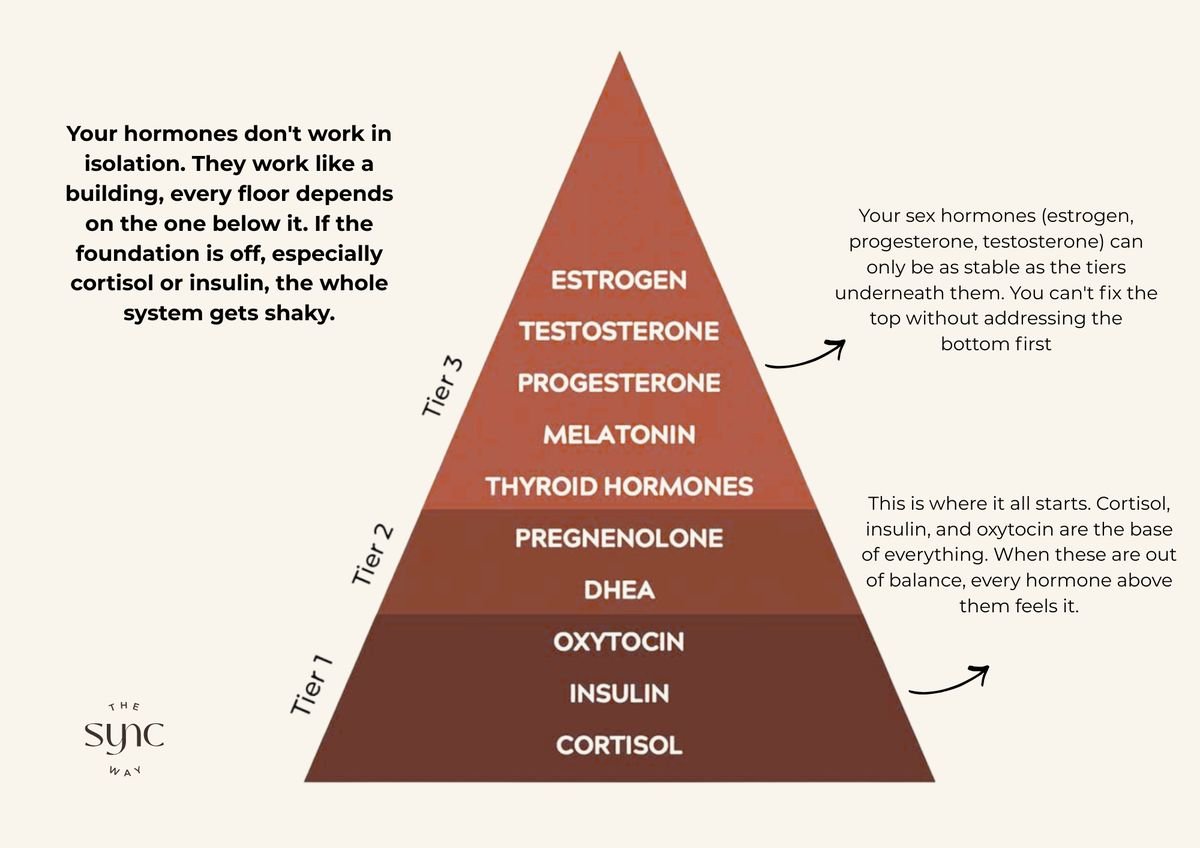
Think of your hormones like a building.
Insulin sits at the foundation. Your sex hormones, estrogen, progesterone, testosterone, they live on the upper floors.
If the foundation is unstable, it doesn’t matter how beautiful the upper floors are. The whole building is shaky.
When insulin is dysregulated, your body can’t properly balance estrogen, progesterone, or testosterone. You end up with worse PMS, irregular cycles, stubborn weight gain, energy crashes, and cravings that feel impossible to control.
So if you want to support your sex hormones, you start with insulin. And if you want to support insulin, you start with muscle.
Here’s What Actually Happens in Your Body
Let me walk you through the basics because once you see this, everything clicks.
When you eat, most of what you consume contains some level of carbohydrates. Your body breaks those carbs down into glucose, which is sugar. And your body loves glucose because it’s the fastest, easiest source of energy.
When that glucose enters your bloodstream, your pancreas releases insulin. Insulin’s job is to act like a key: it unlocks your cells so glucose can move from your blood into your tissues to be used or stored as energy.
And where does most of that glucose get stored? Your muscles.
Skeletal muscle is the single largest site for glucose uptake in your body. Your muscles are responsible for absorbing up to 80% of the glucose you consume after a meal.
So the more muscle you have, the more storage space your body has for glucose. More storage means your body handles sugar more efficiently, your blood sugar stays steadier, your insulin doesn’t have to spike as high or work as hard. Fewer spikes, fewer crashes, more stable energy throughout your day.
And when insulin is stable, your sex hormones can actually do their job. Your liver isn’t overburdened trying to manage excess glucose, your ovaries get cleaner signals, your cycle becomes more predictable.
But when you don’t have enough muscle mass, your body runs out of room to store that glucose. So insulin has to keep pumping harder and harder to force sugar into cells that are already full. Over time, your cells stop responding as well, which is called insulin resistance. And insulin resistance is one of the most common root drivers behind PCOS, irregular cycles, weight gain around the midsection, chronic fatigue, and hormonal acne.
This is why strength training isn’t just a fitness thing. IT’S A HORMONE THING!
📢📢📢📢📢📢📢 (please give me another megaphone I can’t shout this loud enough!)
The Sign My Body Was Screaming That Nobody Caught
If you read my [🔗previous article on drainage], you already know this part of my story. But it fits here perfectly because it’s the moment everything connected for me.
About 10 years ago, I couldn’t sweat.
I’d sit in a sauna for 20 minutes and nothing. Not a single drop. I’d get red, puffy, overheated, but my body just… wouldn’t release.
And back then, I didn’t understand why. Neither did any of the doctors I visited (or at least they did not point me in this direction).
But let me paint you the full picture of where I was at that time, because the sweating wasn’t happening in isolation.
My cycles were irregular. My periods were so painful I’d go through entire blister packs of ibuprofen every month. I was puffy and swollen all the time, full-body inflammation that I just accepted as normal. I’d wake up congested every single morning, my legs would swell so badly after sitting for a few hours that walking felt heavy, brain fog was my default. I was sluggish, fatigued, couldn’t think straight until halfway through the day.
I’d been diagnosed with PCOS, put on the pill, taken off the pill, symptoms everywhere.
And I wasn’t pooping every day. Sometimes I’d skip a day or two without thinking twice about it.
All the signs were there. Every single one of them was pointing in the same direction. But nobody connected the dots, nobody told me to look at my lymphatic system, nobody said “Hey, your body is showing you that your elimination pathways are backed up.”
When Everything Started to Shift
Things started to really move when 2 things happened around the same time:
1️⃣ I learned how the lymphatic system actually works, and
2️⃣ I started lifting weights
And my entire body transformed.
I’m not talking about how I looked. I’m talking about HOW I FELT.
I finally felt light. Like someone had lifted a weight off my entire body that I didn’t even know I was carrying.
The brain fog was gone. In the mornings, I was alert, actually alert. I didn’t recognize myself. I used to drag through the first half of every day thinking that was just how my body worked.
But you don’t realize what’s possible when you’re living in that state. You think the sluggishness is normal, you think the puffiness is just “how your body is,” you think the fatigue is because you didn’t sleep enough or you need more coffee.You have no idea how good you can feel until you get a taste of it.
And once I got that taste, I never stopped. I never stopped going to the gym.
The Sweat That Finally Came
And something else happened. I started sweating. Like, really sweating. The kind of sweating where you finish a session and your body feels like it just flushed itself clean, because that’s essentially what’s happening.
When you sweat, your body is eliminating toxins, metabolic waste, and used-up hormone byproducts through your skin. Sweat is one of your body’s key elimination pathways. Your hormones don’t just get produced and used, they have to be broken down and cleared out through your liver, your bile, your stool, your urine, and your sweat.
If those exits are blocked, if you’re not sweating, not pooping daily, not supporting your lymph, those byproducts don’t just disappear. They recirculate, they build up, and they contribute to exactly the kind of symptoms I was living with: the puffiness, the inflammation, the PMS, the brain fog, the irregular cycles.
Strength training helped open those pathways for me. Muscle contractions physically pump lymph fluid through your body since your lymphatic system doesn’t have its own pump the way your cardiovascular system has your heart.
Your muscles ARE the pump.
Every time you contract a muscle under load, you’re manually moving lymph through your system, helping your body clear what it needs to clear.
So when I started building muscle, I wasn’t just improving my insulin sensitivity or my body composition. I was waking up an entire elimination system that had been stagnant for years.
And this is what I wish someone had told me a decade ago…
So I’m here telling you NOW!
Where Do You Actually Start?
Okay. I know you’re getting excited now, you want to start lifting. But the next question is always the same: where do I even begin?
I’m going to give you exactly what I wish someone gave me when I was standing in that gym for the first time, feeling completely lost.
1️⃣ Get a coach, even if it’s just for the start.
It will save you SO MUCH time, and possibly injuries. The easiest, most effective way to begin is to have a personal trainer next to you for your first few sessions. It’s NOT forever, just enough to learn the basics.
A good trainer will give you a plan, show you proper form, and most importantly give you the confidence that you’re doing this right. That confidence alone is worth it because it’s what gets you to come back.
I personally had a trainer in the beginning. And the single best thing they taught me wasn’t a specific exercise, it was this: always know which muscle you’re working.
That one piece of awareness changes everything. When you understand which muscle is supposed to be firing, you can feel whether your form is right, you can make small adjustments on your own, you stop mindlessly going through motions and start actually connecting with your body.
That mind-muscle connection is what separates someone who shows up at the gym from someone who actually sees results.
2️⃣ If a trainer isn’t in the budget right now, you still have options.
I get it, investing in a personal trainer isn’t always possible. So here are some resources I personally used in the beginning and I still recommend to my clients:
🔗MuscleWiki = this website is incredible. You click on a muscle and it shows you exactly which exercises target it and how to perform them with proper form. Bookmark it, it’s basically a free trainer in your pocket.
Workout apps… there are so many good ones now. I personally started with an app called 🔗Evolve You, built by Krissy Cela. It gave me structure when I had none, and structure is everything when you’re starting out. There are plenty of others, find one that feels right for you and commit to it for at least a month before switching.
You Don’t Need Hours at the Gym
This is where a lot of women overcomplicate things and then never start.
You don’t need to live at the gym. You need 45 to 50 minutes, 2 to 4 times a week. That’s it.
And here’s a tip that will save you time and give you more results: go for compound movements.
Compound exercises are movements that work multiple muscle groups at the same time. Instead of sitting on a machine that isolates just your hamstrings, you do squats, deadlifts, hip thrusts, lunges. These exercises recruit your glutes, your hamstrings, your quads, your core, all in one movement.
More muscles working means more efficient sessions, more efficient sessions mean you get more done in less time, and you’re building functional strength, the kind your body actually needs in real life.
The Real Battle Happens Before You Get There
Now let me talk about the thing nobody warns you about.
The hardest part of working out is never the workout itself, it’s the 20 minutes before.
You planned to go to the gym in the morning. Your alarm goes off. And suddenly every fiber of your being is negotiating with you.
“I’m tired,”
“I’ll go tomorrow,”
“I don’t have enough time for a full session,”
“My body doesn’t feel great today.”
I still get this. After 7 years of consistent training, that resistance still shows up. It’s your body’s comfort default, it wants to stay where it’s safe, where it’s easy, where nothing is being asked of it.
And that moment, that exact moment of friction, is the most important moment of your entire workout. Because if you push through it and get yourself to the gym, you’ve already won. The workout is a bonus at that point, you just proved to yourself that you’re the kind of person who shows up even when it’s hard.
Your Only Job in Month One
In your first month, forget about the perfect program, forget about progressive overload, forget about optimizing anything.
Your only job is to build the habit of showing up.
If you planned an hour but you only have 20 minutes, go for 20 minutes. If you’re tired and can only do half the exercises, do half. If you wake up late and almost talk yourself out of it, go anyway.
Every time you show up despite the resistance, you’re strengthening something way more important than any muscle. You’re building discipline, you’re building identity, you’re becoming the kind of woman who trains, who takes care of her body, who doesn’t quit when things get uncomfortable.
And once that identity is locked in, once showing up feels automatic, THEN you optimize, then you refine, then you start playing with programming and intensity and all the fun stuff.
But the foundation is always the same: just show up.
But What About Cycle Syncing My Workouts?
I know this is the question burning in your mind right now.
“Teo, how do I adjust my workouts to my cycle?
When do I go heavy?
When do I pull back?
Should I do yoga during my period and HIIT during ovulation?”
That conversation is coming, but not today.
If you’ve been reading my previous articles, you already know where I’m going with this. Cycle syncing your workouts is optimization, and optimization comes AFTER you’ve built the foundation.
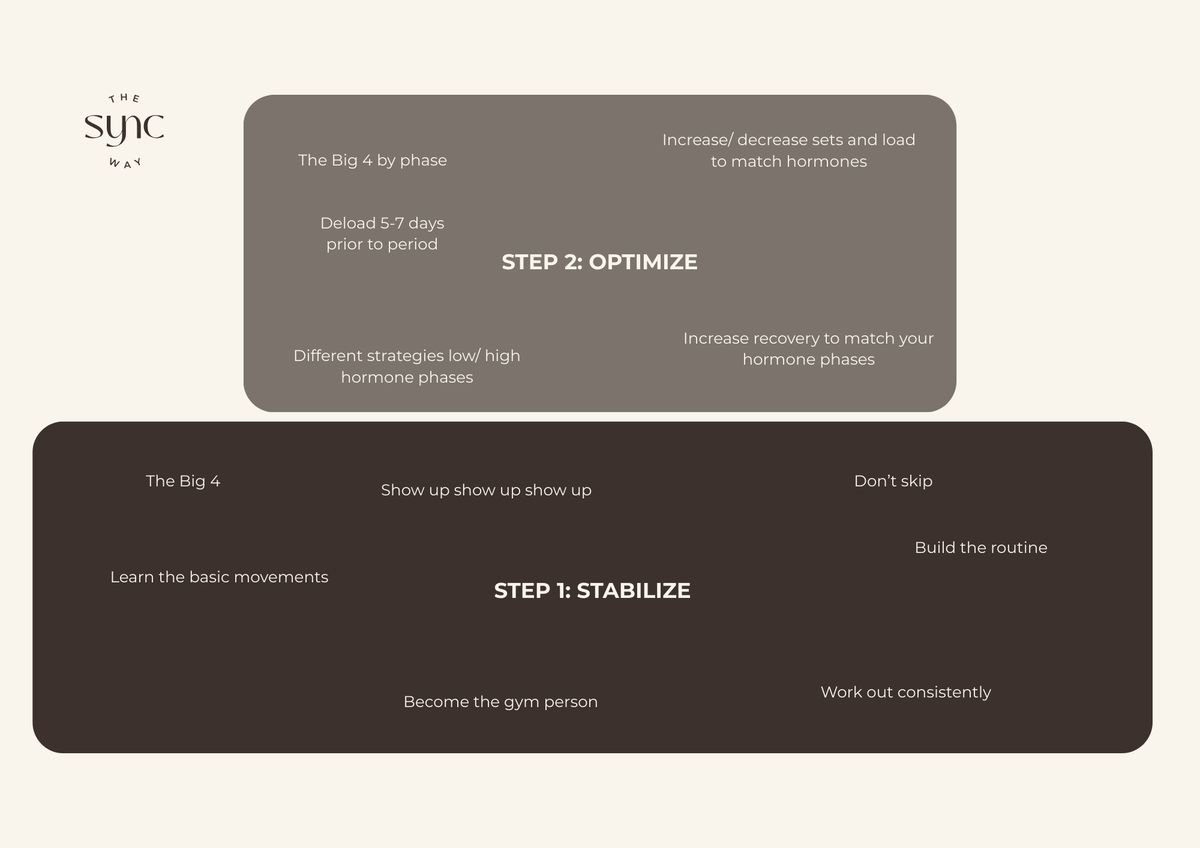
You need to be a gym person first. You need to understand the movements, feel comfortable with the weights, know your way around a squat rack without second-guessing yourself, and have moved past “trying out the gym” into genuinely identifying as someone who trains.
Once that identity is locked in, then we talk about syncing. And when we do, I’m going to challenge everything you think you know about it!!!!!
Because training with your cycle doesn’t mean rotating between yoga, Pilates, HIIT, cycling, and dance cardio depending on your phase. That patchwork approach doesn’t build muscle, and building muscle is your number one priority for your hormones.
What actually changes across your cycle is intensity, volume, and recovery. The foundation stays the same: progressive overload, meaning you keep increasing the resistance, the tension on the muscle, the weight over time. That’s how muscle gets built, there’s no shortcut and no phase-specific workaround.
So for now, your job is clear. Get to the gym, build the habit, learn the movements, fall in love with what your body can do when you ask more of it.
I’ll be back with the full breakdown of how your cycle actually interacts with your training, and it’s going to make so much more sense once you have this foundation under you.
First you stabilize, then you optimize. You already know the drill.
The Big Four
In my programs and in the methodology I’ve developed over the years, everything comes back to 4 pillars. I call them the Big Four: eat, move, drain, sleep. And then you repeat the cycle.
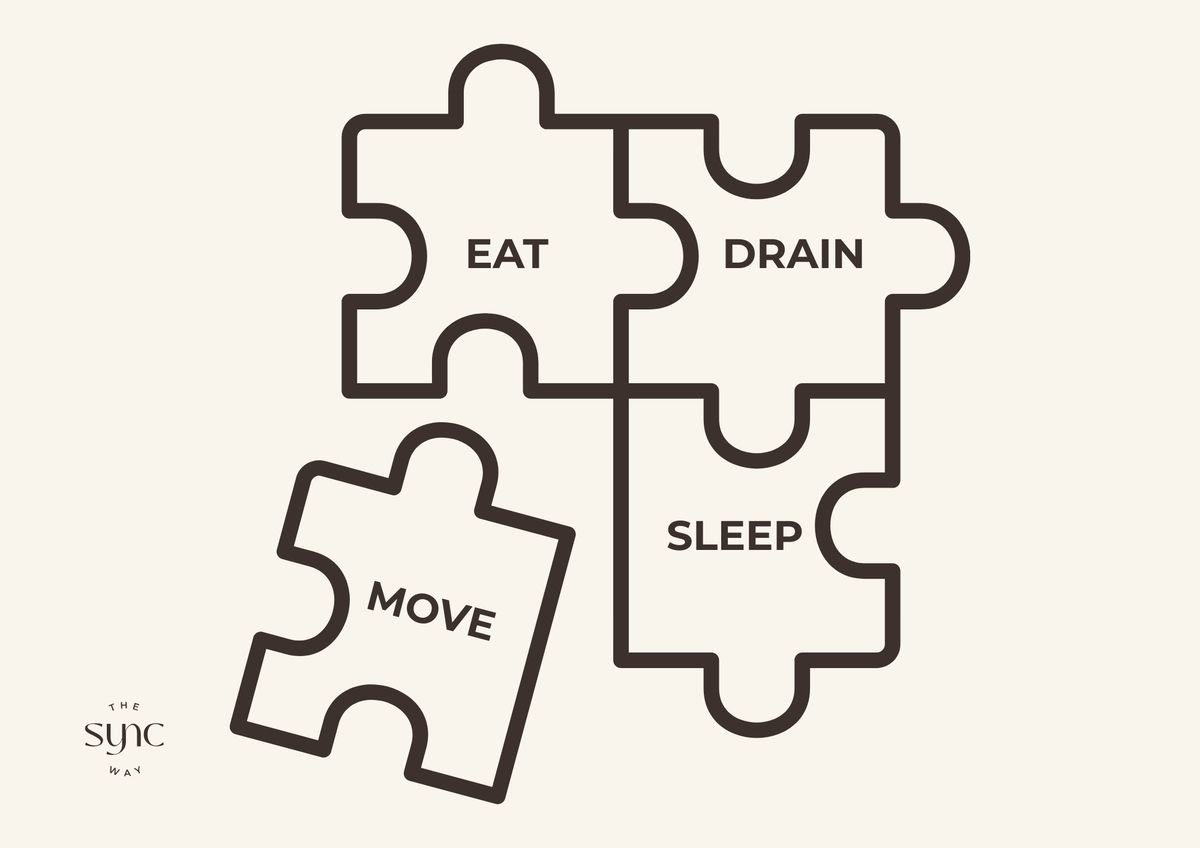
These are the pillars of hormone health. The foundation that I build my own life on and that I apply with every single client I work with.
Today, we talked about move. And honestly, this is just the tip of the iceberg. There is so much more to unpack about how strength training interacts with your hormones, your cycle, your metabolism, your mood, all of it.
In the coming articles, I’m going to walk you through each one of these pillars, what they actually mean, why they matter for your hormones, and how to support each one without overcomplicating your life.
So if you’re not subscribed yet, now’s the time. You don’t want to miss what’s coming.
Want more?
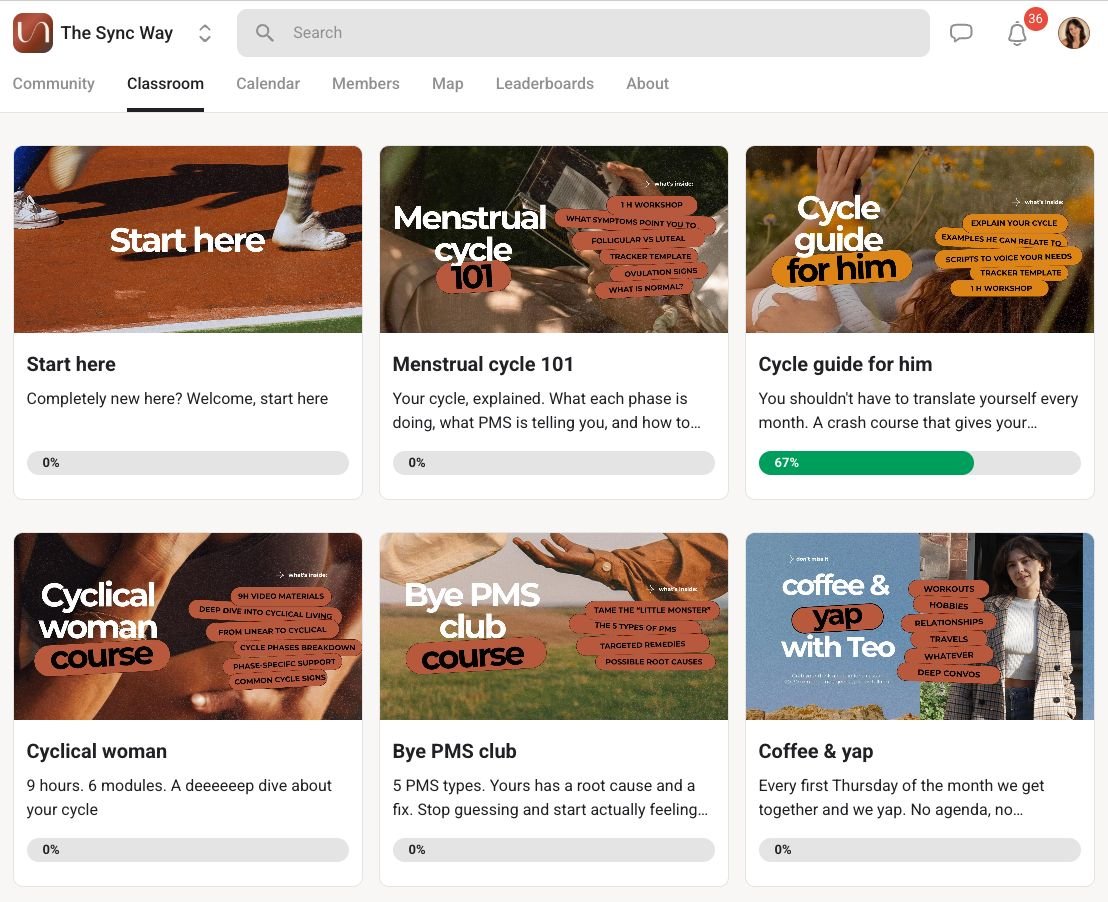
We have a free community space, where you can come in and learn more about hormones, your cycle, and connect with women on the same journey! Lots of learnings, lots of fun! Come in!!
If you said yes, I’ll see you inside.
Love, Teo
← Back to all articles